
Introduction
Hearing is one of our most important senses. It allows us to communicate with family and friends, enjoy music, stay aware of our surroundings, and participate fully in daily life. However, millions of people experience hearing problems at some point in their lives. Some may notice difficulty understanding conversations, while others may struggle to hear sounds that once seemed clear.
A hearing loss evaluation is a professional assessment that helps identify hearing problems, determine their cause, and guide appropriate treatment. Early evaluation is essential because untreated hearing loss can affect communication, relationships, work performance, and overall quality of life.
In this article, we will explore what hearing loss evaluation is, why it is important, how it is performed, and what to expect during the process.
What Is Hearing Loss?
Hearing loss occurs when a person cannot hear sounds as clearly as someone with normal hearing. It can range from mild to severe and may affect one or both ears.
Some common signs of hearing loss include:
- Frequently asking people to repeat themselves
- Difficulty understanding conversations in noisy places
- Turning up the television or radio volume excessively
- Trouble hearing phone conversations
- Feeling that people are mumbling
- Ringing or buzzing sounds in the ears (tinnitus)
Hearing loss can develop gradually over time or happen suddenly due to illness, injury, or exposure to loud noise.
What Is a Hearing Loss Evaluation?
A hearing loss evaluation is a series of tests conducted by a hearing healthcare professional, such as an audiologist or ear specialist. The purpose is to measure hearing ability and determine whether hearing loss is present.
The evaluation helps identify:
- The type of hearing loss
- The severity of hearing loss
- Possible causes
- The best treatment options
This assessment provides valuable information that helps healthcare providers create a personalized care plan for each patient.
Why Is Hearing Loss Evaluation Important?
Many people ignore hearing difficulties because they believe hearing loss is a normal part of aging. While age-related hearing changes are common, hearing problems should never be ignored.
Early hearing evaluation offers several benefits:
1. Early Detection
Identifying hearing loss early allows treatment to begin sooner, preventing further complications.
2. Improved Communication
Proper diagnosis and treatment help individuals communicate more effectively with family, friends, and coworkers.
3. Better Quality of Life
People with untreated hearing loss often experience frustration, social isolation, and reduced confidence. Early intervention can improve emotional well-being.
4. Protection Against Further Damage
Some causes of hearing loss can worsen if left untreated. Evaluation helps identify problems before they become more serious.
5. Support for Children’s Development
For children, hearing plays a vital role in speech and language development. Early testing can ensure timely support and treatment.
Who Should Get a Hearing Loss Evaluation?
Anyone experiencing hearing difficulties should consider a hearing evaluation. Certain groups may benefit even more from regular testing.
Adults
Adults should seek evaluation if they:
- Notice changes in hearing
- Have difficulty understanding speech
- Experience ringing in the ears
- Work in noisy environments
- Have a family history of hearing loss
Older Adults
Age-related hearing loss is common. Regular hearing assessments help maintain communication and independence.
Children
Children should be evaluated if they:
- Show delayed speech development
- Do not respond to sounds consistently
- Have frequent ear infections
- Experience learning difficulties related to hearing
Individuals Exposed to Loud Noise
People who work around machinery, construction equipment, firearms, or loud music are at higher risk of hearing damage.
Types of Hearing Loss
A hearing evaluation helps determine which type of hearing loss a person has.
Conductive Hearing Loss
This occurs when sound cannot travel properly through the outer or middle ear.
Common causes include:
- Earwax blockage
- Ear infections
- Fluid in the middle ear
- Damage to ear structures
Conductive hearing loss is often treatable.
Sensorineural Hearing Loss
This type results from damage to the inner ear or auditory nerve.
Common causes include:
- Aging
- Noise exposure
- Genetic factors
- Certain medications
Sensorineural hearing loss is usually permanent but can often be managed with hearing aids or other devices.
Mixed Hearing Loss
Mixed hearing loss combines both conductive and sensorineural hearing loss.
What Happens During a Hearing Loss Evaluation?
A complete hearing evaluation usually includes several steps.
Medical History Review
The healthcare provider will ask questions about:
- Hearing difficulties
- Medical conditions
- Medications
- Noise exposure
- Family history of hearing loss
This information helps identify possible causes of hearing problems.
Physical Ear Examination
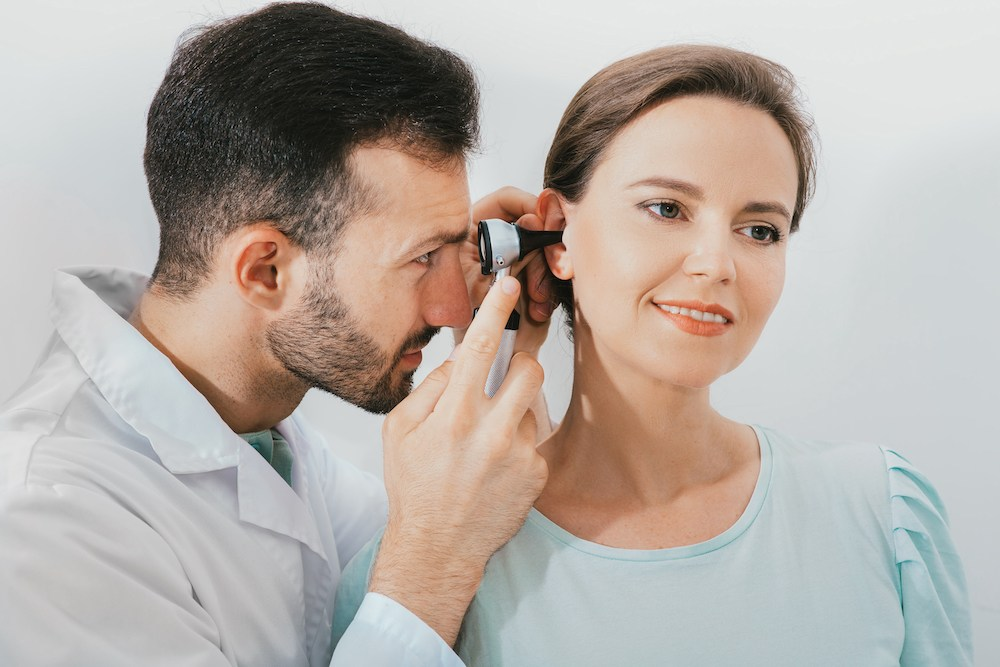
The provider examines the ears using a special instrument called an otoscope.
This examination can reveal:
- Earwax buildup
- Infection
- Inflammation
- Structural abnormalities
Hearing Tests
Several hearing tests may be performed.
Pure-Tone Audiometry
This is one of the most common hearing tests.
During the test:
- The patient wears headphones.
- Sounds of different pitches and volumes are played.
- The patient indicates when sounds are heard.
Results help determine the degree and pattern of hearing loss.
Speech Testing
Speech testing measures how well a person understands spoken words.
The patient listens to words and repeats them back. This helps evaluate communication ability.
Tympanometry
This test evaluates middle ear function.
It can detect:
- Fluid behind the eardrum
- Ear infections
- Eardrum problems
Bone Conduction Testing
Bone conduction testing helps determine whether hearing loss is conductive or sensorineural.
A small device placed behind the ear sends sound vibrations directly to the inner ear.
Additional Tests
In some cases, specialized tests may be recommended to investigate specific concerns or medical conditions.
Understanding Hearing Test Results
After testing, the audiologist reviews the results and explains the findings.
Results typically include:
Degree of Hearing Loss
Hearing loss is often classified as:
- Mild
- Moderate
- Moderately severe
- Severe
- Profound
Type of Hearing Loss
The evaluation identifies whether hearing loss is conductive, sensorineural, or mixed.
Hearing Thresholds
Hearing thresholds indicate the softest sounds a person can hear at different frequencies.
These results are displayed on an audiogram, a chart used to visualize hearing ability.
Treatment Options After Evaluation
Treatment depends on the cause and severity of hearing loss.
Hearing Aids
Hearing aids amplify sounds and improve communication for many individuals with hearing loss.
Modern hearing aids are smaller and more advanced than ever before.
Medical Treatment
Some hearing problems can be treated with:
- Medications
- Earwax removal
- Infection treatment
Surgery
Certain conditions may require surgical correction.
Examples include:
- Eardrum repair
- Middle ear reconstruction
- Cochlear implant procedures
Cochlear Implants
For individuals with severe hearing loss who do not benefit from hearing aids, cochlear implants may provide improved hearing ability.
Communication Strategies
Patients may also learn techniques such as:
- Facing speakers directly
- Reducing background noise
- Using assistive listening devices
Tips for Protecting Your Hearing
Preventing hearing damage is easier than treating it later.
Consider these hearing protection tips:
- Wear ear protection in noisy environments.
- Limit exposure to loud music.
- Keep headphone volume at safe levels.
- Take listening breaks.
- Avoid inserting objects into the ears.
- Schedule regular hearing checkups.
Healthy hearing habits can help preserve hearing throughout life.
Conclusion
A hearing loss evaluation is a valuable step toward understanding and managing hearing problems. Whether hearing difficulties develop gradually or suddenly, professional assessment can identify the cause and guide effective treatment.
Early evaluation allows individuals to maintain communication, protect their hearing health, and improve their quality of life. From simple earwax removal to advanced hearing technology, many solutions are available once hearing loss is properly diagnosed.
If you or a loved one notices signs of hearing difficulty, scheduling a hearing loss evaluation can be the first step toward better hearing and a more connected life.
Frequently Asked Questions (FAQs)
1. How long does a hearing loss evaluation take?
Most hearing evaluations take between 30 and 60 minutes, depending on the tests being performed and the complexity of the hearing issue.
2. Is a hearing loss evaluation painful?
No. Hearing evaluations are completely safe and painless. Most tests involve listening to sounds and responding to them.
3. At what age should hearing be tested?
Hearing can be tested at any age. Newborns, children, adults, and seniors can all benefit from hearing assessments when needed.
4. Can hearing loss be reversed?
Some types of hearing loss, such as those caused by earwax or infections, may be reversible. Other types, especially sensorineural hearing loss, are usually permanent but can often be managed effectively.
5. How often should hearing be checked?
Adults should consider hearing evaluations every few years, while older adults and individuals exposed to loud noise may benefit from more frequent testing as recommended by their healthcare provider.